

Winch
Why choose us
Our Factory
Henan Puwei Machinery Equipment Co., Ltd. is a high-tech joint-stock enterprise with a good reputation both domestically and internationally. It was established on October 29, 2018, and its registered address is No. 8, Nanpu Shuangchuang Industrial Park, Changyuan County, Xinxiang, Henan Province. The company specializes in the manufacturing of hydraulic and lifting machinery.
Our Product
The business scope includes the sales, installation, and maintenance of lifting equipment, hoists, dam top door operators, electric flat cars, electric hoists, cranes, winches, lifting accessories, hydraulic metal structures, engineering machinery, and complete machines.
Product Application
Lifting equipment has a wide range of applications across construction, manufacturing, mining, aviation, shipping, logistics, and other industries. With the continuous advancement of science and technology, the design and manufacturing processes of lifting equipment are also constantly improving, providing better handling services to users from all walks of life.
Production Market
In recent years, our company has adhered to the concepts of efficiency, professionalism, and integrity. We have achieved outstanding performance for our customers and received widespread praise. Our products are distributed throughout China's Yunnan, Hubei, Hunan, Guangdong, Guizhou, and other regions, with a significant number of cranes and hoisting machinery exported to Southeast Asian countries such as Vietnam, Laos, and Myanmar.
Our Service
Our company adheres to the ISO9001 international quality system as the standard, with strict corporate management as the guarantee. It is our firm commitment to provide customers with high-quality pre-sales, sales, and after-sales services. Enthusiasm, timeliness, satisfaction, and thoughtfulness are the tenets of our after-sales service. If customers provide feedback on product quality, the company will resolve any inconveniences and offer technical consultation and services in the shortest possible time.
What is Winch
A construction winch is a mechanical device used in construction projects to lift or pull heavy loads. It is typically mounted on a vehicle or a fixed structure and consists of a drum or reel around which a wire rope is wound. The winch is powered by an electric, hydraulic, or pneumatic motor, allowing it to exert a significant amount of force to move or hoist heavy objects. Construction winches are commonly used in applications such as lifting construction materials, pulling equipment, or towing vehicles. They are designed to provide stability, durability, and control to handle the demanding requirements of construction sites.
-
 Electric WinchElectric hoist is a kind of lifting equipment that uses the motor as the power source, and realizes the lifting or translation of the object by turning the drum through the driving device.Add to Inquiry
 -
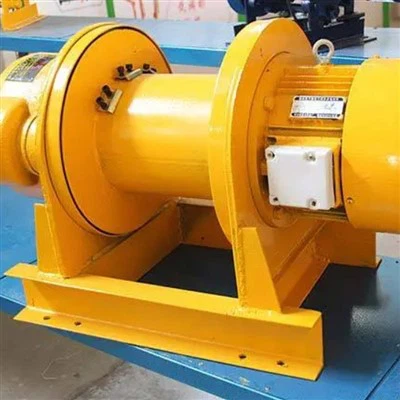 Mini WinchA miniature hoist, also known as a small hoist, is a special electric crane for construction projects. It is usually composed of motor, reducer, transmission mechanism, reel, gear and control systemAdd to Inquiry
 -
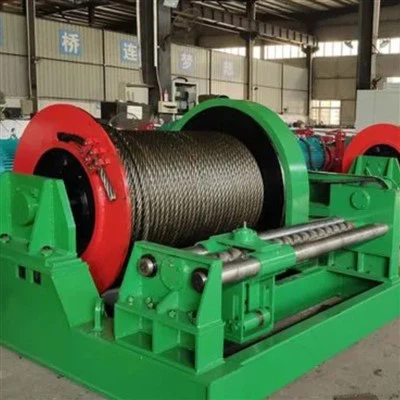 Large WinchLarge hoist is an important equipment widely used in various engineering and construction sites. It is usually composed of a motor, a reducer, a drum, a brake, a pulley block, a wire rope and aAdd to Inquiry


Benefits of Winch
Enhanced Material Handling
One of the primary advantages of using construction winches is their ability to streamline material handling. These winches can easily lift heavy materials such as concrete, steel beams, and construction equipment, reducing the need for manual labor and expensive equipment like crane limit switches. By automating material transport both vertically and horizontally, construction winches can save considerable time and labor costs.
Improved Worker Productivity
With construction winches, workers spend less time manually moving materials and equipment between different levels of a building. This improved efficiency allows them to focus on more specialized tasks, thereby increasing overall productivity. Additionally, by reducing physical strain on workers, construction winches can contribute to a safer work environment, leading to fewer workplace accidents and associated costs.
Faster Project Completion
The accelerated material handling and improved worker productivity facilitated by construction winches contribute to faster project completion. Construction schedules can be met more efficiently, reducing the need for expensive overtime and potential delays. Completing projects ahead of schedule can also have positive financial implications, such as early occupancy revenue for residential or commercial buildings.
Cost-Effective Alternative to Cranes
While cranes are a common choice for lifting heavy materials on construction sites, they can be costly to rent or purchase and require skilled operators. Construction winches offer a more cost-effective alternative for smaller projects or situations where cranes are not viable. Winches are versatile, easily transported, and set up, making them a practical choice for various applications.
Increased Safety Measures
Construction winches are designed with safety in mind, featuring multiple mechanisms such as limit switches, emergency stop buttons, and overload protection. These safety features reduce the risk of accidents, ensuring the well-being of workers and protecting valuable equipment and materials. By minimizing workplace incidents, construction winches can also help avoid legal liabilities and associated expenses.
Easy Installation and Portability
Construction winches are typically compact and easy to install, requiring minimal setup time. Their portability allows for use in multiple locations throughout the construction site, optimizing material handling efficiency. Additionally, their adaptability makes them suitable for various project types and site conditions, further contributing to cost savings.
Sustainability and Eco-Friendliness
Many construction winches are electrically powered, significantly reducing their carbon footprint compared to traditional diesel-powered equipment. By embracing sustainable and eco-friendly practices, construction companies can gain a competitive edge and appeal to environmentally conscious clients. Additionally, reducing reliance on fossil fuel-powered machinery can lead to long-term cost savings as energy costs continue to rise.
Modular Design for Versatility
Construction winches are often designed with a modular approach, allowing customization to specific project requirements. Whether altering the lifting capacity, platform size, or speed, their versatility ensures that construction winches can adapt to different scenarios. This flexibility not only saves time but also helps optimize costs by providing tailored solutions for each project.
Braking system of Winch
Here are some common brake systems that can be used with construction pulling winches:
Electromagnetic Brake
This type of brake uses electromagnetic force to apply braking action. It’s commonly used in electric-powered winches because it provides fast and reliable braking. Electromagnetic brakes are actuated by an electric current, which makes them easy to control and maintain.
Hydraulic Brake
Hydraulic brakes use pressurized fluid to apply braking force. They are often used in larger and heavier winches where more braking power is required. Hydraulic brakes provide smooth and consistent braking action, and they can be actuated by hydraulic pumps or other fluid power sources.
Disc Brake
Disc brakes are a type of mechanical brake that uses friction between a brake pad and a rotating disc to generate braking force. They are commonly used in winches that require high-performance braking, such as those used in heavy-duty construction equipment. Disc brakes are known for their durability and ability to handle high temperatures.
Combination Brake System
In some cases, a combination of different brake systems may be used to provide redundant braking or to enhance braking performance. For example, an electromagnetic brake may be used as the primary brake, while a disc brake or hydraulic brake provides additional braking power in case of emergency.
Components of a Winch
Brake: The brake stops the winch from paying out unwanted winch line. In electrically powered winching equipment, the brake automatically engages the moment you turn off the motor.
Clutch: The clutch allows you to control the rotation of the winch drum. When you disengage the clutch, the drum detaches from the gear train, allowing it to rotate freely (free spooling). After engaging the clutch, the drum locks back into the gear train, preventing free spooling. Once the clutch is engaged, you can start winching.
Control Box: The control box houses all the electronic components of the winching system. Most winching machines now come with a waterproof control box, which is often placed on or next to the winch. The control box relays signals from the remote control to the motor.
Drum: The drum is a hollow metal cylinder. When you turn on the motor, the drum starts rolling, wrapping the wire rope around it. You can use the remote to change the direction in which the drum rolls.
Fairlead or Wire Lead: As the name suggests, the fairlead or wire lead guides the wire rope as it wraps around the drum. The purpose of a fairlead is to minimize damage to the wire rope as it passes through a winch mount or bumper. The two most common types of fairleads are roller fairleads and hawse fairleads.
Gear Train: The gear train connects the electric motor to the winch's gear system. It transforms electrical energy into powerful mechanical force, allowing you to pull heavy objects using the winch.
Motor: The electric motor powers the gear system in the winch. The gear system is connected to the winch drum, which winds the wire rope when you turn on the motor. Typically, you can use your vehicle’s battery to power the motor.
Remote Control: The remote control allows you to control the winching process and the direction in which the drum rolls. It also enables you to stand clear of the winch and the wire rope, reducing the risk of accidents. Modern winch systems come with either a wired or wireless remote control.
Winch Line or Wire Rope: The wire rope, or winch line, is usually made of steel cable or synthetic material. The type of rope, along with its diameter and length, determines how much load the winch can pull. The wire rope is looped at the end to attach a hook.
Indexes on Why It Is Necessary to Pay Attention to the Purchase of a Winch
Regardless of the setting, choosing a winch requires careful consideration of its descriptions, principles, and terms of use. For example, it is important to take into account the following factors:
Carrying Capacity: This is the first aspect to consider. If the winch cannot move a load from its place, then it serves no purpose. This parameter must not only meet the necessary requirements but also include a margin for safety.
Frequency of Use: This helps determine which type of winch is best suited for your needs. For infrequent tasks in a garage setting, drum models typically lead the way. For continuous and long-term work, a pneumatic winch is the best option. In other situations, electric models tend to be advantageous.
Size: This depends on the power and carrying capacity of the winch. Additionally, the capacity of the drum and the thickness of the rope are also relevant. A lightweight winch can easily be mounted to a wall using wall screws, while a heavier winch may need to be set on the floor or secured with additional support.
Type of Working Element: A rope is preferable when reliability is critical and weight is not a concern. This type is better suited for stationary lifting and hauling mechanisms. For portable winches, a lanyard is more appropriate.
Speed of Operation: This is determined by the rate of movement of the drive and the gear ratio. Some models allow for step or smooth speed adjustments for winding and unwinding the rope. Additionally, a winch with higher speed specifications and price may be necessary for specific situations.
Components of a Winch
Drum
The drum is the core component of a winch, responsible for storing the winch cable or rope. It is typically cylindrical in shape and rotates as the winch operates. The drum’s size and capacity dictate the length and weight of the cable it can hold. The double drum winch can hold more weight than the single drum winch.
Cable or Rope
The cable or rope is wound around the drum and is the element that makes contact with the load. It’s crucial to select the appropriate type and material of the cable based on the application, as different materials have varying degrees of strength and flexibility.
Motor
The motor provides the necessary power to drive the winch. It converts electrical energy into mechanical energy, generating the force required to move the load. Winches can be powered by electric, hydraulic, diesel and pneumatic motor, depending on the application. The hydraulic winch often has higher load capacity.
Gear Train
The gear train is a set of gears that amplify the power generated by the motor. It allows the winch to exert a greater force than what the motor could achieve alone. The gear ratio can be adjusted to balance speed and pulling capacity.
Control Switch
The control switch allows the operator to control the direction and speed of the winch. It can be a simple toggle switch or a more sophisticated remote control, depending on the winch’s complexity and purpose.

Convert electrical energy into mechanical energy through a motor. That is, the motor's rotor rotates and outputs, and then drives the hoist drum to rotate after being decelerated by the V-belt, shaft, and gear. The drum winds the wire rope and passes through the pulley block to make the crane hook lift or drop the load. Convert the mechanical energy into mechanical work. And complete the vertical transportation, loading and unloading of heavy objects.
Electric Winches
Electric winches are the most common type of winch and are widely used in both industrial and recreational applications. They are powered by an electric motor and can be operated with a remote control or a switch. Electric winches are known for their reliability and ease of use, making them ideal for tasks that require precision and control.
Hydraulic Winches
Hydraulic winches are powered by a hydraulic system and are capable of handling heavier loads than electric winches. They are often used in industries such as construction, oil and gas, and marine, where heavy lifting is required. Hydraulic winches are known for their durability and high performance but require regular maintenance to ensure smooth operation.
Pneumatic Winches
Pneumatic winches are powered by compressed air and are commonly used in hazardous environments where the use of electricity or hydraulic systems is not safe. They are often used in mining, offshore drilling, and other industrial applications where explosive gases or dust are present. Pneumatic winches are known for their safety and reliability in these challenging conditions.
Manual Winches
Manual winches are operated by hand and are often used in situations where power sources are not available or practical. They are commonly used in small boats, trailers, and off-road vehicles for tasks such as loading and unloading cargo. Manual winches are simple to use and maintain but require physical effort to operate, making them less suitable for heavy-duty applications.
Industrial Winches
Industrial winches are designed for heavy-duty lifting and pulling tasks in industrial settings. They are often used in construction, mining, and manufacturing industries where large and heavy loads need to be moved. Industrial winches are built to withstand harsh conditions and continuous use, making them reliable tools for demanding applications.
Common Winch Applications
Marine Craft & Fishing Boats
Worm Gear, Planetary and Capstan Winches are used within the marine and fishing environments. We offer numerous options so you can find a solution for your operation, big or small.
Vehicle Recovery
Tow trucks need winches, Hydraulic Winch to aid in your vehicle recovery operation!
Off-Road Vehicles
Recovery tools for off-roading are a must. Winches allow you to pull vehicles from snow, mud, sand, rocks, water and more.
Waste & Refuse
Garbage trucks are an example of something that uses a winch. Hydraulic Winches are specifically designed with safety and toughness in mind.
Utility & Electric
Hydraulic Winches and Capstans are used in the utility and electric industries every day. This is why we offer different series along with galvanized options, so you have optimum load control for enhanced safety.
Construction Equipment
Worm Gear, Planetary and Capstan Winches have proven their reliability by meeting our customers' demanding requirements in specialized construction applications. View our options here.
Aircraft
Aircrafts are another industry where winch applications are necessary. Gliders are launched using a winch system while helicopters may use a winch to aid in recovery.
Drilling Equipment
In the water well and drilling industries, Hydraulic Winches and Capstans are the best of the best with guaranteed optimum performance.
Theater
Winches have been used in theater for larger productions. Backstage mechanics come into play to move large set pieces on and off stage.
Wakeskate
Waterskiing or snowboarding actually can involve a winch! A person is propelled against the water with a winch and can be towed with the rope.
There are a few things to keep in mind when using a winch to ensure safe operation. Here are some tips:
Read the manufacturer’s instructions carefully before using the winch.
Inspect the winch and its components regularly to ensure they are in good condition.
Do not overload the winch. Make sure that the object being lifted or moved is within the winch's weight capacity.
Be aware of your surroundings and take care not to damage property or injure people while using the winch.
Never leave the winch unattended while it is in use.

Our Factory
Henan Puwei Machinery Equipment Co., Ltd. was established on October 29, 2018, and its registered address is located at No. 8, Nanpu Shuangchuang Industrial Park, Changyuan County, Xinxiang, Henan Province. The business scope includes lifting equipment, hoists, dam top door operators, cleaning machines, electric flat cars, electric hoists, cranes, winches, lifting accessories, hydraulic metal structures, engineering machinery equipment and accessories, electric hoists, and complete machine parts. Sales, installation, maintenance, and manufacturing.


FAQ
We're professional winch manufacturers and suppliers in China, specialized in providing high quality custom service. We warmly welcome you to wholesale cheap winch from our factory.
Mini Winch, Large Winch, winch